

Written by longtime Liberal Party member Daniel Jones, find more of his content on 𝕏 @veryfrenly
‘‘It is a broad church and we should never as members of the Liberal Party of Australia lose sight of the fact that we are the trustees of two great political traditions.’’ John Howard
In my long membership of the NSW Liberal Party, I must have heard that quote repeated dozens and dozens of times, usually by some Party Leader who is appealing for a sense of unity among the squabbling (Left-wing) Moderate and Conservative factions.
It is well known that the Liberal Party has factions. John Howard himself characterised as mere preselection co-operatives, I too have seen the factions operate as nihilistic vehicles for the ambitions of talentless hacks, the ongoing battle over net-zero for example has played out on those Moderate and Conservative factional lines. Regardless, they do represent the broad strokes of the Liberalism of John Stuart Mill and the Conservatism of Edmund Burke.
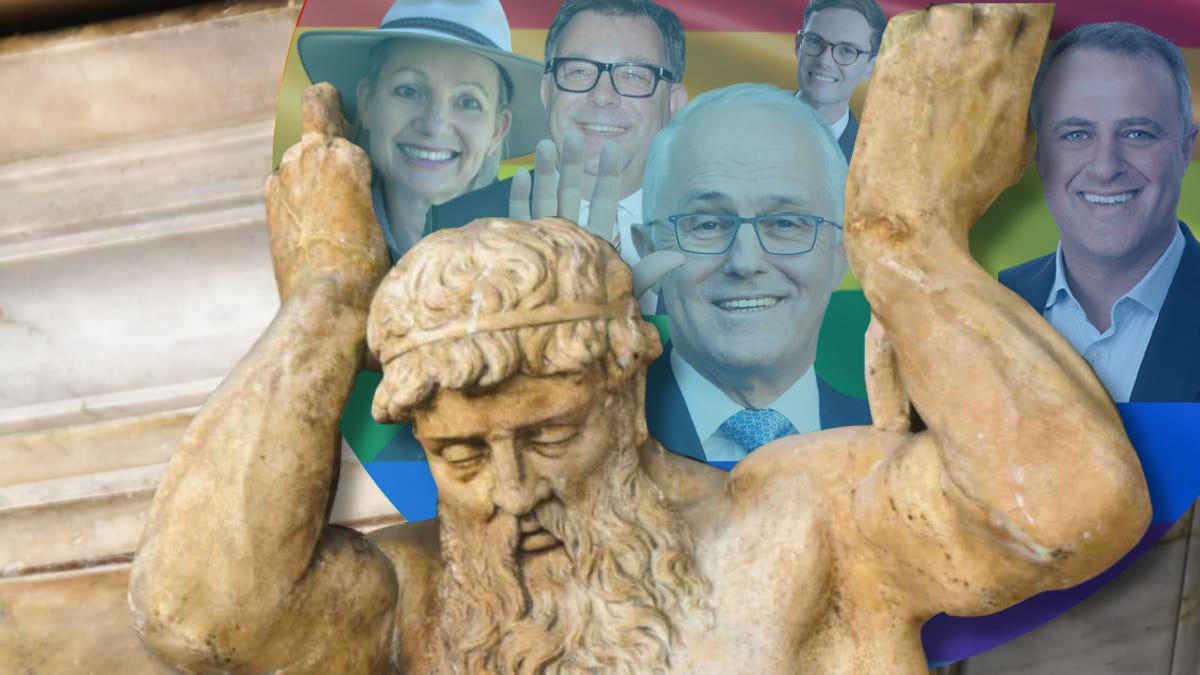
The Moderates have generally held sway in the largest states of New South Wales and Victoria; they have institutional advantages that their Conservative rivals have not been able to match. The Moderates dominated the Liberal Party, most clearly in NSW, because they were concentrated in the safest and wealthiest Liberal seats and, resultantly, the Moderates could get their people over the line in preselections. Before the coming of the Teals, a Moderate MP never had to worry about losing an election, so they could spend the bulk of their time and resources on factional activity.
In the safe seats, the typical Moderate party activist was a retired or semi-retired professional; their activists were the wealthiest people in the party with padded out Superannuation accounts and defined benefit pensions. They were people who had plenty of time and money to play, and frequently win, in the game of factional politics.
When I went out into Western Sydney where the Conservatives held sway, I would see middle-aged blokes coming in off a day on the tools, attending branch meetings and hitting the phones organising volunteers for campaigning. For these people, politics and factional activity was something that had to be done in the evening since they had to hold down a real job by day.
As well, Moderate ideology of squishy centrism meant that they were infinitely politically flexible. They could always get the donations from Business interests and big Corporates because they would never say or do anything that stepped on their toes, such as advocate for reduced immigration. Their fundraising vehicles were donation machines.

Although the Moderates have been dominant. I always wondered whether the Moderate or Conservative faction of the Liberal Party actually represented the larger cohort of voters. The membership of the NSW Liberal Party is somewhere between 5,000-10,000, approximately 0.1-0.2% of the 5.7 million voters enrolled in NSW, so it was always unlikely that the membership was representative of the broader electorate.
Now this is finally coming to the test, and I believe that it really shows how little support Small-L Liberalism really held amongst voters.
Pauline Hanson’s One Nation is polling at 28% of the vote federally. The Liberals are down to 13% (excluding the Queensland LNP). Watching the Liberal vote crash in the polls feels like watching Bear Stearns share price crash in March 2008, it feels like there is no bottom, and it is careening towards political bankruptcy.
This reveals the fundamental truth; The Liberal Party always depended on the much larger cohort of Big C-Conservative voters to actually vote for them on Election Day. My guess is that now the Moderate Liberals could win only 8-12% of the vote by themselves, the same polling numbers that the Australian Democrats would pull and the Greens can never break through.
After all these years, we finally know the truth: the Liberal Party was always a Moderate icing on a much larger Conservative cake.
In 1996, when Pauline Hanson launched herself into Australian Politics with her dynamite maiden speech, she threatened to split the Conservative side of Australian politics.
John Howard was the X Factor that blunted the rise of One Nation the first time around.
Howard called himself the most Conservative leader the Liberal Party has ever had. He refused to engage in the nasty game of ‘Racist!’ name-calling that the Left and the Media directed at Hanson and her supporters; he knew that it would only drive them permanently into Hanson’s arms.
Howard could keep One Nation’s voters on the reservation by pinching Hanson’s best ideas, such as mandatory offshore detention of asylum seekers and wrapping himself in the Australian flag. As well, the economy was booming, and the budget was recovering; so there was enough Government largess to go around, affording him the ability to spend as much as was needed to keep her voters happy.
Once it was all over and Hanson was finished in 2004, he could ramp up immigration and unleash the Howardwave to satisfy the Business Lobby’s unquenchable thirst for cheap labour.
There is no John Howard to bail the Moderates out like the last time that Hanson got momentum behind her in the 1990s. One Nation has already blown past 10% that it polled at the beginning of the 1998 Federal Election. Conservative voters are deserting the Liberal Party reservation in droves.
Neither Hastie nor Taylor nor any other pretender to the Liberal Party throne can hold a candle to John Howard’s raw political talent and Machiavellianism. The reckoning has been delayed for 30 years, but the dam cannot hold back the flooding river anymore.
By all appearances, the Moderates aren’t going to change and are going to moderate themselves into Total Liberal Death.
Calling anything associated with the Liberal Party conservative is pretty funny. The only good outcome in any of the fighting going on with the L/NP is the death of it. Period.