

Written by Flynn Holman, find more of his content on 𝕏 @Flynn_Holman_
“There is a view that right-wing violence is a pathology to be eradicated, whereas left-wing violence is a grievance to be explained”. These words by Smith & Tan (2025) pinpoint the glaring double standard at the heart of the political polarisation narrative being pushed by today’s media. Much like the dogma of equity, diversity, and inclusion which has entrenched itself within modern institutions, the caricature of the “violent right-wing radical” is a manufactured bogeyman, peddled relentlessly to stifle dissent and justify government control. Feminist academics dominate the literature, pushing narratives which connect nationalism, particularly in young men, to a rise in violent attitudes. Educational curricula have increasingly incorporated elements designed to address this purported rise, encouraging a sense of shame and guilt among young Australian males. This narrative has even permeated popular media, as seen in Netflix’s series Adolescence, which, despite its fictional basis, has been promoted as educational viewing in schools. If the “young, violent right-wing radical” narrative remains unchallenged, it threatens to silence legitimate nationalist movements and embed ideological conformity within the Australian community.
Media outlets, politicians, and security agencies continue to push the narrative that Australia is on the brink of a nationalist terror wave. In the wake of the Bondi terror attack, perpetrated by Islamist extremists, politicians seemed more concerned with the hypothetical threat of right-wing violence and remained reluctant to deal with the true perpetrators. Measures such as hate speech laws and protest restrictions have been enacted under the banner of “social cohesion,” a term synonymous with mandated multiculturalism. While “Nazis” serve as convenient rhetorical foils in this leftist fever dream, a closer examination of the evidence reveals scant support for the claimed escalation of right-wing violence.

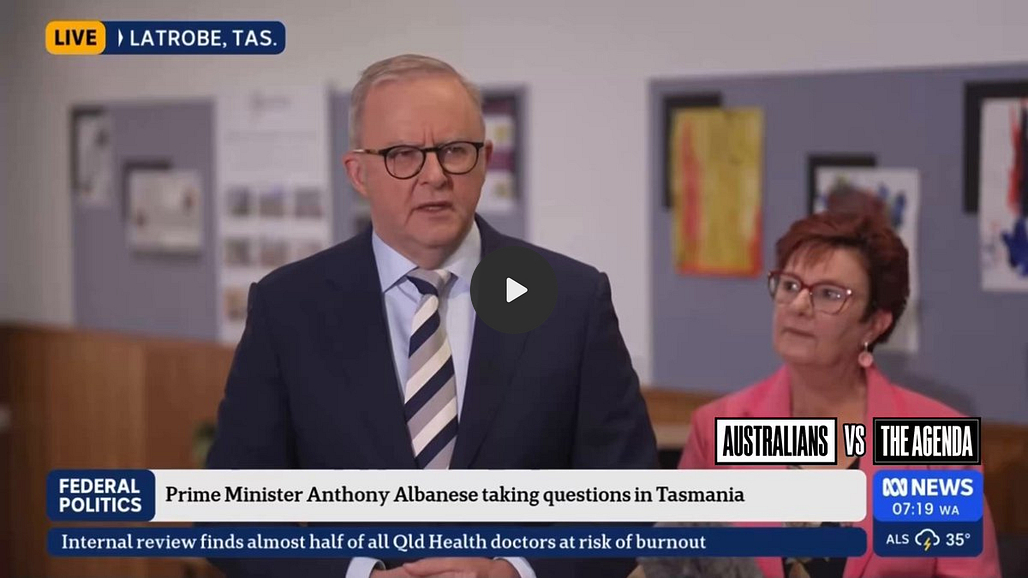
The emphasis on a rising right-wing extremist threat gained momentum after the 2019 Christchurch Mosque shootings, where the actions of a single individual triggered widespread scrutiny of Australia’s nationalist movements. ASIO Director-General Mike Burgess has stated that nationalist and racist violent extremism now comprises up to 40% of counter-terrorism caseloads, with young men radicalising online. The national terrorism threat level was raised to “probable” in 2024 and remains elevated. But ASIO’s own figures distinguish between investigations and actual violence: the principal completed attacks and deaths continue to come from religiously motivated (Islamist) extremism. This gap between rhetoric and reality has real consequences. It justifies expansive hate-speech laws, surveillance of nationalist groups, and pre-emptive bans, egged on by a compliant left-wing ecosystem.

Yet these same sanctimonious leftists turn a blind eye to the rhetoric and outright violence spewing from their ideological allies. Numerous examples illustrate this disparity:
The British Australian Community has meticulously chronicled scores of vandal assaults on Australian monuments, peaking around our national day. These acts including beheadings of cultural icons, blood-smeared statues, and wanton destruction are the handiwork of Aboriginal extremists committed to terrorising “white colonisers.” This is ethnic intimidation, yet media coverage contorts it into justified protest born of “generational trauma,” refusing to condemn it as the assault on our shared heritage it truly is.
Since 2000, all confirmed terrorist attacks on Australian soil have involved Islamist extremists, underscoring a pattern that warrants greater focus, yet we have seen politicians pandering to Muslim communities and seeking to repatriate ISIS-aligned extremists from Syria.
An alleged terror plot targeting participants in the March for Australia in Brisbane elicited minimal ideological scrutiny compared to similar scenarios, for example, in Perth on Australia Day.
Climate activist groups like Rising Tide and Extinction Rebellion employ disruptive tactics bordering on eco-terrorism, yet these are often portrayed as principled advocacy for urgent environmental action.
Even high-profile international examples fit the pattern. The 2025 assassination of conservative activist Charlie Kirk in Utah was carried out by Tyler Robinson, whose family and prosecutors have described as having largely left-wing views, yet media coverage avoided labelling the murder “left-wing terrorism”.
Right-wing and nationalist figures, however, face severe repercussions and condemnation for minor infractions. Pauline Hanson has encountered gaol threats for asserting “there are no good Muslims,” while leftist politicians like Lidia Thorpe have issued comparable provocations without consequence. Online nationalists like AUSPILL have endured condemnation and legal threats for a postering campaign highlighting the oxymoronic use of the term “Aussie” today. Drew Pavlou’s investigation into ethnic communities’ NDIS rorts faces defamation suits, Joel Davis was imprisoned without bail for online posts, and Brandan Koschel was gaoled for delivering a speech at a public rally.
Repeatedly, left-leaning activists benefit from contextual explanations rooted in grievance, inequality, or historical injustice, whilst right-wing figures face personal and legal threats. This creates an institutional asymmetry: right-wing expression is presumed dangerous and swiftly met with legal intervention, while left-wing activism is analysed through a more forgiving sociological framework. This bias originates in academic research that advances personal ideologies under the guise of objective inquiry, which ultimately influences government policy.
Much of the policy narrative rests on academic work that receives uncritical media amplification. A prime case is the June 2024 University of Melbourne policy brief Misogyny, Racism and Violent Extremism in Australia by Sara Meger and colleagues. Widely cited as proof that “misogyny and racism” drive violent extremism among young Australian men, the brief’s own data tells a more complex story.
Researchers surveyed 1,100 young Australians. They measured seven forms of “violent extremism” support with a single Likert-scale question each. Anti-feminist violent extremism, for example, was defined solely by agreement with: “Feminism is damaging to our society and should be resisted by force if necessary.” Nearly 14% of respondents agreed overall; men were at 19.4% vs 8.3% for women. Young men showed higher rates, but the study also recorded substantial female agreement — a detail absent from most headlines. In fact, anti-feminist sentiment was the strongest of the seven forms of extremism in women.
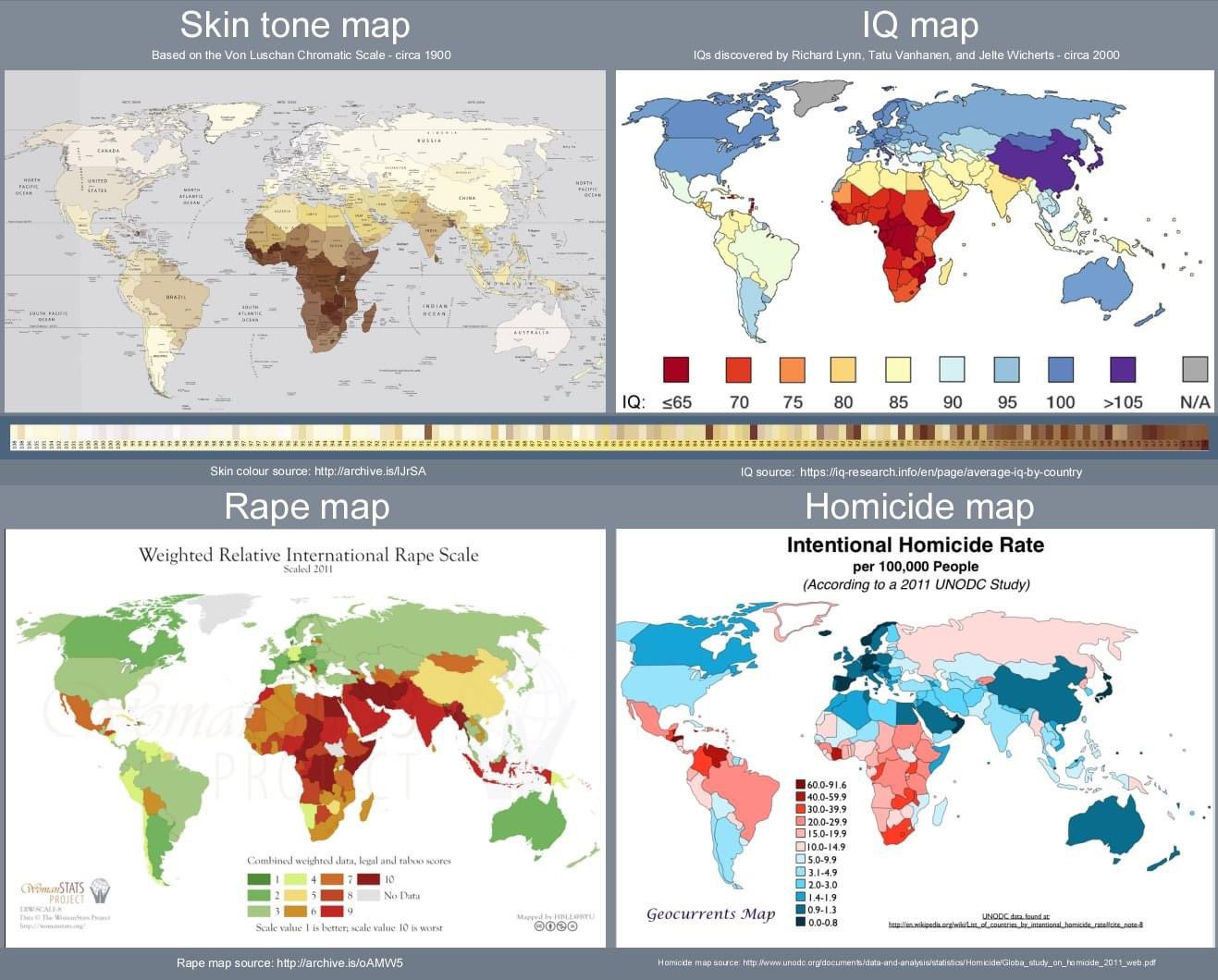
Misogynistic attitudes (including questions such as “Women often make sexual assault accusations as a way of getting back at men” or “Sometimes a woman can make a man so angry that he hits her when he didn’t mean to”) and racist attitudes (e.g., “Usually, the lighter someone’s skin, the more natural intelligence they possess”) were tested as predictors. It’s unsurprising many of these questions received much agreement among the respondents. There are numerous documented cases of women making up or inflating sexual assault accusations, and many academic studies have found strong links between skin colour and IQ. Nevertheless, fact does not seem to be a consideration in this ‘scientific’ publication.
Using logit regression, the authors reported dozens of “significant” results at a p < 0.1 threshold. This is a lenient standard that is higher than the standard 0.05 metric and, across multiple tests, inflates false positives, bringing into question the reliability of the investigation conducted. Crucially, misogyny and racism predicted support for violence across the spectrum: religious, ethnic, economic revolutionary (left-wing wealth redistribution by force), economic reactionary, incel, anti-feminist, and white-supremacist forms. Racism was a strong predictor even for left-wing economic extremism. Universal correlations like this are a common problem with broadly defined and imprecise variables, with low significance thresholds.
The brief’s authors, whose prior work includes “Che Guevara and the Case for Revolutionary Feminism“ and “Morbid Symptoms: A Feminist Dialectics of Global Patriarchy in Crisis,” indicates a feminist foundation that influences the interpretations. There is clear evidence in their conclusions and public commentary that they have cherry picked their data to emphasise right-wing and misogynistic links while downplaying the cross-ideological findings. Unsurprisingly, the links between sexism, racism, authoritarianism and left-wing extremism, which was often stronger than with that of right-wing extremism, was deliberately ignored. Media outlets ran instead with headlines about radicalised young men and the “manosphere.” Yet the one form of ‘extremism’ with no link to misogynistic attitudes were the so-called white supremacists – the opposite of what most public commentary suggested. This selective framing betrays the work’s undeniable ideological contamination with the authors’ radical feminism. This is not neutral social science, yet it shapes government policy.
Now the Albanese government has turned this bias into law. New 2026 hate-speech legislation, the Combatting Antisemitism, Hate and Extremism Act, hands ministers sweeping powers to proscribe “hate groups” below terrorism thresholds, with very few limits and no legal recourse. The National Socialist Network (NSN), Australia’s most prominent neo-Nazi group disbanded in January 2026 rather than face automatic criminalisation. The group has faced zero terrorist convictions nor committed any attacks, whilst leading associates have faced Antifa led car bombings and imprisonment for online posts. The group’s dissolution removes a community for angry young men, driving them deeper underground where they’re harder to police; exactly what experts on European bans have warned creates group fragmentation and unpredictable lone actors.
Blinded by this view that “violent right-wing radical” is the pre-eminent threat to Australian society, the government will continue to threaten Australian society whilst they refuse to recognise that they have emboldened Islamist extremism, forgiven left-wing extremists and potentially created a lone-actor threat. Currently the data is unambiguous: Australia does not face a right-wing terror wave. Left-linked activism has delivered widespread cultural vandalism and economic disruption, routinely excused, and Islamist extremism has delivered the body count.
Yet guided by ‘science’ built on ideology not evidence, governments continue to weaponise hate-speech laws against nationalists, expand surveillance on dissenters, and shame young Australian men in our schools. While real threats persist, Australia’s security infrastructure is diverted toward silencing legitimate questions about immigration, identity, and national security – a blatant attempt at ideological control.
This two-tiered system erodes trust, breeds resentment, and leaves actual dangers unchecked. Far from strengthening community bonds, the Albanese government’s response can only be seen as a further attempt to disenfranchise ethnic Australians and entrench their own ideological control. There are legitimate questions to be asked about the role of multiculturalism in Australian society. The violent right-wing radical might be a good rhetorical villain but ignoring the clear and present threats to Australians entrenched in Australia’s left-aligned multicultural and activist communities will only continue to fracture our once homogenous society. The numbers don’t lie.