


The following is one chapter titled ‘What of the ACTU?’ from The National Observer’s recently published book Australia Forever, written by Australia’s most courageous MP, Graeme Campbell.
Pick up your copy of the book today on Amazon…
…or receive a complimentary copy when you become an Annual Supporter of The National Observer!
As far as the high immigration intake generally goes and its specific effect on Australian workers, what of the ACTU [Australian Council of Trade Unions], the supposed guardian of working conditions? What was it doing while immigration numbers were being forced up? During the rise of multiculturalism and a strident brand of feminism the ACTU found itself under attack by middle class left leaning academics for not taking these concerns to heart. The ACTU resisted these criticisms initially, but gradually gave way.
People of the sort who made the criticisms, rejecting the aspirations of their own class, but not the comforts of the lifestyle, have systematically taken over the Labor Party. The agenda of these people reflect their own aspirations and desire for status. They may still support workers in specific efforts to secure better working conditions, but their support for a high immigration rate means that wages and working conditions will invariably be undermined anyway.
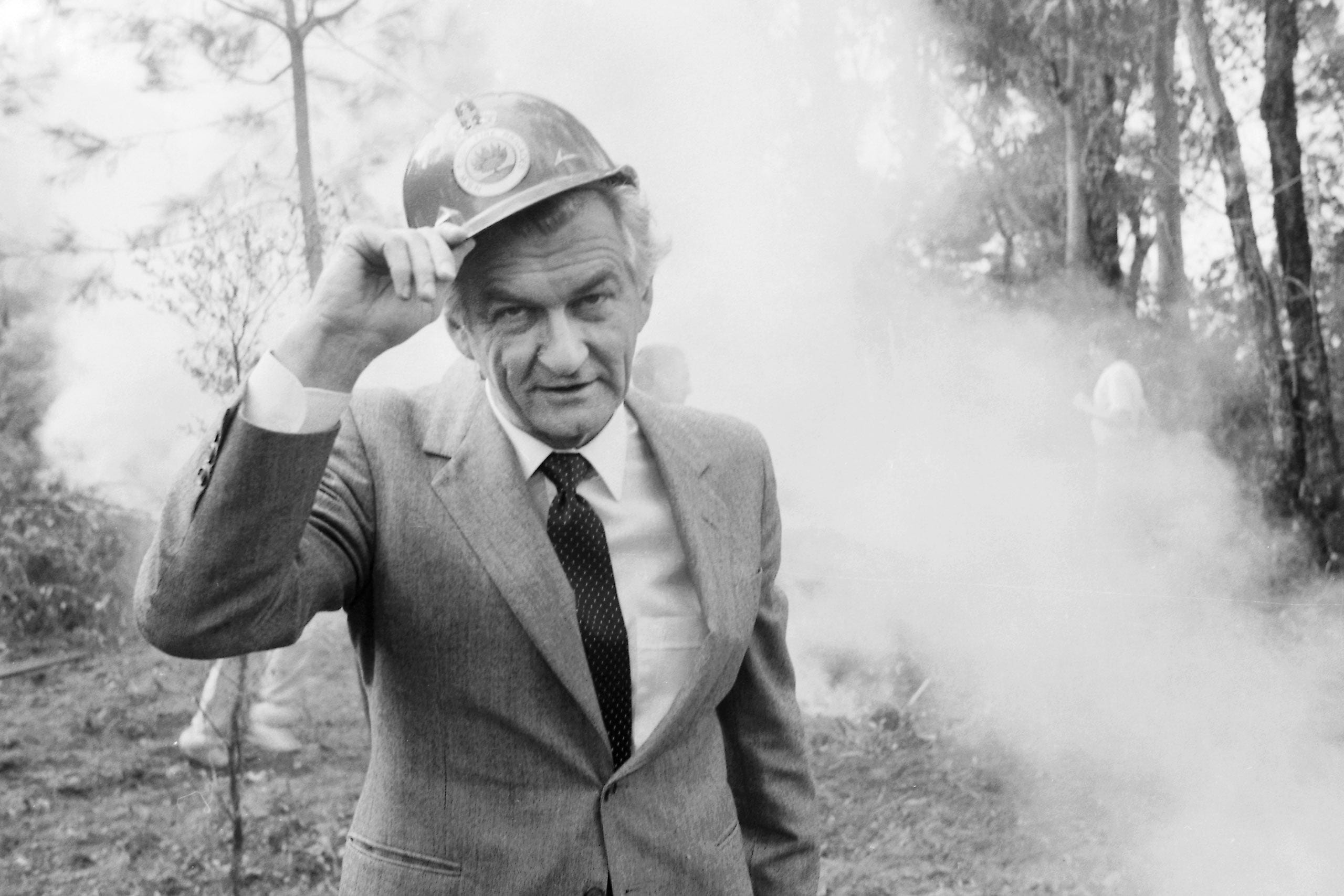
Also in other respects, such as lifestyle, they regard the Australian working class with derision, particularly the working class male. They realise that the working class is most resistant to their agenda, particularly the god of multiculturalism. Workers who regard themselves first and foremost as Australian have not only been denied a voice but also their lifestyle and their value as human beings are being attacked by the organisations which are supposed to represent them. Bob Hawke, when Prime Minister, and other Labor politicians, were never slow to join these Volvo socialists in their attacks. The old Australian working class will find more sympathy for them as people in the mainstream old Australian middle class than they will amongst the trendy lefties and social poseurs who have insinuated themselves into their organisations.
So multiculturalism and feminism have become high on the Labor and ACTU agenda and distorted their more traditional working class concerns. The ACTU, in its support of multiculturalism and fear of being branded racist, did not feel as though it could publicly criticise the high immigration levels.
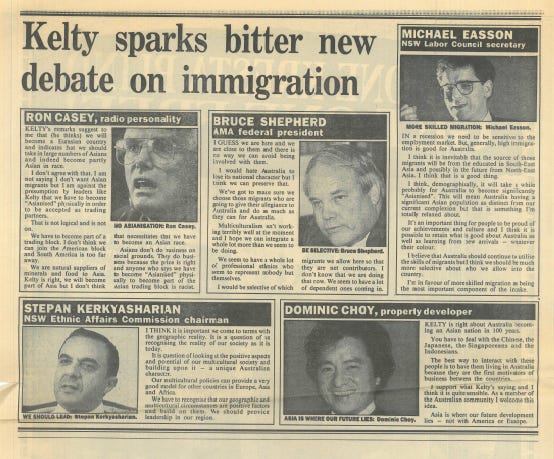
In fact, particularly through its ethnic liaison officer, Alan Matheson, the ACTU is extremely anxious to appease ethnic lobby groups and so very reluctant to confront family reunion. Mr Matheson has also gone so far as to suggest that there is little that can be done to prevent the worldwide movement of labour impacting upon Australia. This echoes the opinion of someone such as Michael Stutchbury of the Australian Financial Review who clearly believes in the “free” movement of labour, along with capital, between nations, as though labour were just a commodity and local governments had no obligations to their own people.
The free movement of labour would mean that the labour export schemes which already widely operate in Asia would be introduced into Australia, with devastating effects on local wages and working conditions. Local workers would essentially be faced with modern day indentured labourers as competitors, particularly if China entered the market in a big way.
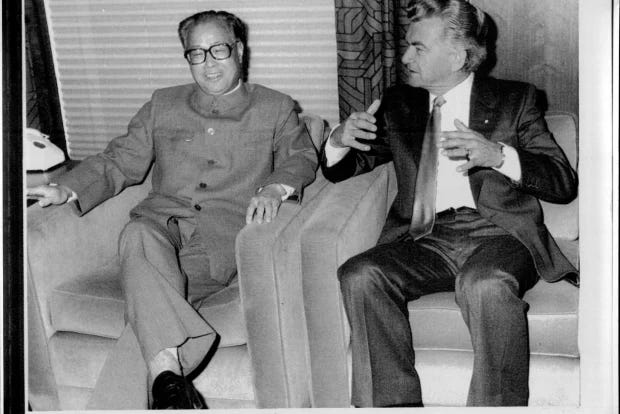
China has yet to embrace labour export schemes to any great extent, but has made significant moves in that direction. The Far Eastern Economic Review, in a 2nd of April article on migrant labour schemes noted that China officially classifies 200 million of its workers as “surplus”. Were a portion of those to be released onto an open Australian labour market the effects can be imagined. The Chinese have already reportedly offered to send two million migrant workers to Japan, to the horror of the Japanese.
That Mr Matheson appears to be oblivious to such potential problems illustrates just how out of touch he is with the sentiments of the people he is supposed to represent: Australian workers. In fact he acts as though he is little more than a captive of the multiculturalist industry and echoes their tactics in trying to take the high moral ground. He has called for “a positive strategy to combat racism” in Australia which no doubt involves more multiculturalist bureaucrats. He and the ACTU in general, as apologists for the policy of multiculturalism, have badly failed Australian workers on immigration.
Big business, real estate operators, property developers and the like, realising multiculturalism’s effect on immigration had moved in behind it before the ACTU. They were free, with ethnic pressure groups, to push for ever higher immigration intakes without the traditional opposition of organised labour. As has been seen, big business favours immigration both because it has a downward effect on wages and working conditions, particularly where those people come from countries with no strong tradition of organised labour, and because, for developers and real estate operators, more people mean more development, regardless of the best interests of the country.
In April 1991 however, the ACTU made a submission to Cabinet for a cut in immigration, though it was very careful not to target the family reunion category. The ACTU called for a cut in skilled immigration of 20,000. This was a short term response to the recession, which had little impact upon the Hawke-led government, but was at least a start. The long term impact skilled immigration has on local training opportunities has to be considered. As long as employers know they can import skilled workers readily there is little incentive for them to train locals.
Apart from locals losing opportunities for training, our unthinking cargo cult commitment to skilled immigration has also meant an oversupply of skills in some areas. The 1990-91 Budget papers acknowledge that overservicing by GPs is caused by the oversupply of doctors. The AMA [Australian Medical Association] recognises that this oversupply is largely caused by the immigration of doctors and is rightly concerned about it. Like engineers—whom we continue to import—we have too many doctors, at least in city areas, where the overwhelming majority of immigrant doctors settle. This not only leads to overservicing pressures, it denies local residents places in medical schools, which because of the oversupply have cut back on student numbers.
Yet the Deputy Prime Minister and Minister for Health Mr Howe has been very slow to confront this problem. On the contrary he initially threatened to flood the country with foreign doctors in his battle with the AMA over his proposed Medicare patient charge of $3.50, which was eventually revised downwards to $2.50 in the face of opposition from the Labor Caucus and ultimately abandoned by Prime Minister Keating. This charge was proposed to offset the costs caused by overservicing.
Mr Howe’s threat to use immigration as a way of attempting to break the strength of local doctors was an echo of the tactic some employers down the years have advocated to break the strength of trade unions. The irony—and the dangerous precedent he would have set—seemed to have been completely lost on him. Mr Howe though subsequently acknowledged that some restrictions on foreign doctors may be necessary and since then has conceded that some form of entry restriction is necessary.
A paper drafted by the Director of the National Health Strategy, Ms Jenny Macklin, entitled The Future of General Practice and released on 15 March this year, took account of the problem of the immigration of doctors. This paper, among other things, called for the intake of overseas doctors to be restricted to 10 per cent of the output of Australian medical schools, which themselves would face a 10 per cent cut in student places. Mr Howe said he supported the thrust of the proposals.
The Macklin paper pointed out that over 400 foreign doctors per year were being allowed to settle permanently in Australia, which was more than five times the number of overseas doctors allowed to settle in Canada, a country with a much larger population. On 16 May this year Dr Howe announced that the number of overseas trained doctors allowed to settle in Australia would be reduced to 200 a year in 1992-93. This followed an announcement by Mr Hand that the qualification of medicine would be downgraded for immigration selection purposes. So there is some progress on that front.
But the problems do not exist only with doctors. Note should be taken of the problems Australian shearers have been experiencing. The Australian of 9 September 1991 stated:
In Victoria, Western Australia and Queensland, Australian shearers are gradually being outnumbered by their New Zealand counterparts to a point where more than 42 per cent of the country’s flock is shorn by foreign hands. Meanwhile at least 80 per cent of Australian shearers remain unemployed.
The Australian Workers Union NSW secretary, Mr Ernie Ecob remarked:
Over the last three and four months there has been a completely orchestrated, organised campaign by the National Farmers Federation to have these foreign teams come in and do the work which has been traditionally done every year, for 20 years, by the locals. The large graziers are bending to the wishes of the NFF to ensure they get the work.
The Australian reported that the itinerant NZ gangs were working for rates of about $90 per 100 sheep, compared with the award rate of $137. This is an example of the traditional attempts to undermine the wages and working conditions of locals by using cheap foreign labour. Further, much of the money earned by the itinerant workers is taken out of Australia. This trend has continued.
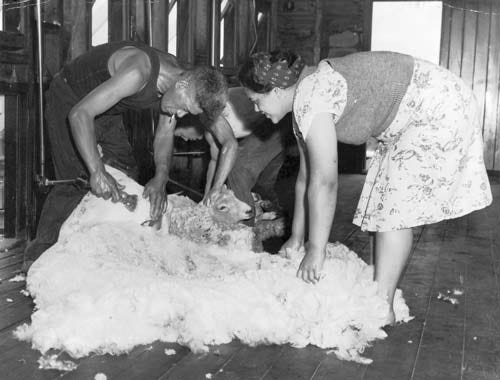
As the New Zealand gangs are predominantly Maori, the issue has become complicated by racial factors. It is interesting to note that the Office of Multicultural Affairs sponsored an episode of the ABC’s ‘A Big Country’ screened in 1991 in which the Maoris were portrayed as being better shearers than the locals. It is typical of OMA’s propaganda techniques that locals are portrayed as inferior to migrants or foreign workers. By such insidious means OMA, a publicly funded body established by a Labor Government, is justifying the undercutting of the wages and working conditions of locals.
The shearers set up a camp outside Parliament House in May/June this year and put their case to the ALP Caucus. Among other things the shearers called for work permits for New Zealanders.
The Closer Economic Relations agreement between Australia and New Zealand stipulates free movement of labour between the countries. Historically Australia and New Zealand have had a special relationship and free movement between the countries has been part of the legacy. With changing times though circumstances are different. A passport requirement was introduced for travel between the countries in 1982 and clearly the case for work permits exists.
CER is basically a trade agreement and it does not follow at all that the freeing up of trade automatically means that labour should be able to move “freely” between nations if this is clearly shown or is likely to disadvantage local workers. Yet in The Sydney Morning Herald of 30 May, a spokesman for the New Zealand Minister for External Affairs and Trade is reported as stating: “You can’t have free trade between countries without a free labour market.” This is apparently the New Zealand Government position.
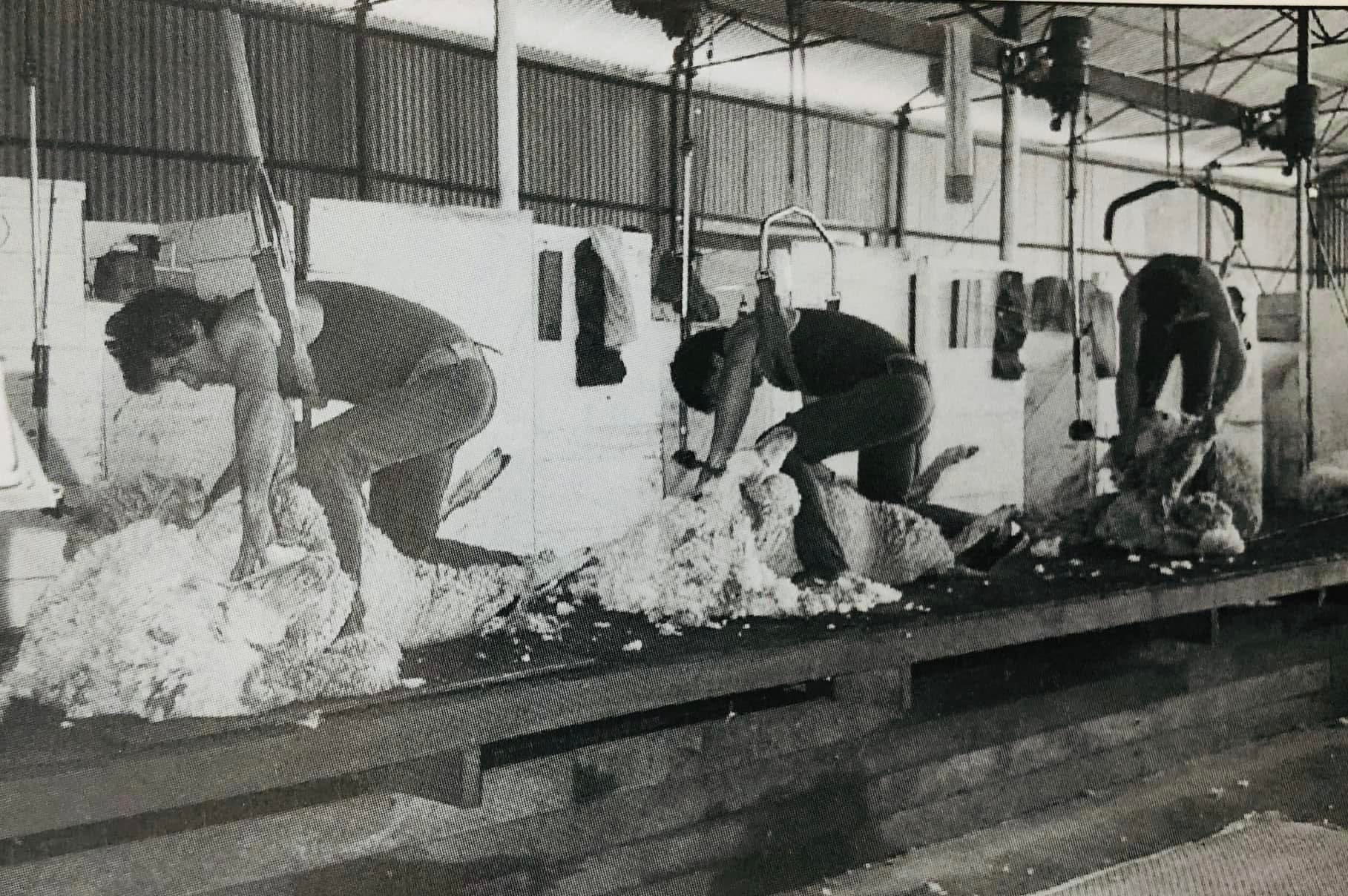
This one example of the shearers being undercut by cheap New Zealand labour gives a small scale indication of what would occur were the present push for freer trade with Asia to be followed by free movement of labour. As already indicated the consequences for local workers would be disastrous. Yet this prospect is seriously proposed by members of the academic and bureaucratic elites. Is this to be the subtext to the “free” trade push—namely the deliberate undermining of local wages and working conditions by the “free” movement of labour in order to minimise production costs? It becomes clear why the bible of high finance in the USA, the Wall Street Journal, preaches open borders in its editorial pages.
The Caucus Immigration Committee backed the shearers. The support of committee chairman Andrew Theophanous may be largely due to the fact that the professional ethnic lobby has always been against preferential treatment for New Zealanders and this was a good opportunity to drive the point home. At any rate the caucus committee recommendation called on the Minister for Immigration to:
Cancel forthwith those aspects of these arrangements, which allow New Zealanders automatic access to the Australian job market, so that uniform standards apply to all non Australians and all eligible visitors seeking employment opportunities in Australia.
A watered-down resolution, which did not support work permits, was later accepted by caucus on 2 June. It called on the government to “cancel those aspects of the travel arrangements that allow New Zealanders to work without paying income tax and in breach of awards”. This however was considerable progress and the shearers dismantled their camp, though they intend to continue pushing hard on the issue, particularly in the lead up to its consideration by Cabinet.
One evocative part of the shearer’s general protests was a meeting on Sunday 31 May of a group of about 100 shearers under the Tree of Knowledge in Barcaldine, Queensland, to support their fellow shearers in Canberra and call on the government to support the resolution of the Caucus Immigration Committee. Under this tree in 1891 a group of shearers met following their disastrous defeat in strike action that year and their resolutions led to the formation of the Australian Labor Party. It is an understatement to say that in recent years they have become disillusioned with the party their predecessors founded.
Whether doctors, shearers or carpet layers, Australian governments and bureaucrats have an obligation to support locals first. If they don’t then nobody else will and if they don’t why should locals have any respect or regard for their government?
Mr Howe also has a grand, but imprecise, plan for the cities, yet nowhere does he acknowledge the impact of immigration on the cities. Cut immigration and a great deal of pressure on the cities would be eased. In fact Mr Howe is all for development of new growth corridors, which combined with urban consolidation, he seems to believe is the answer.
It is clear from the example of doctors and shearers that immigration and itinerant foreign workers have had a negative impact on local employment. In a more general sense, while it is true that there is no hard evidence that immigration increases overall unemployment in the long term, it can hardly be doubted that by increasing the labour pool it has a downward effect on wages and working conditions.
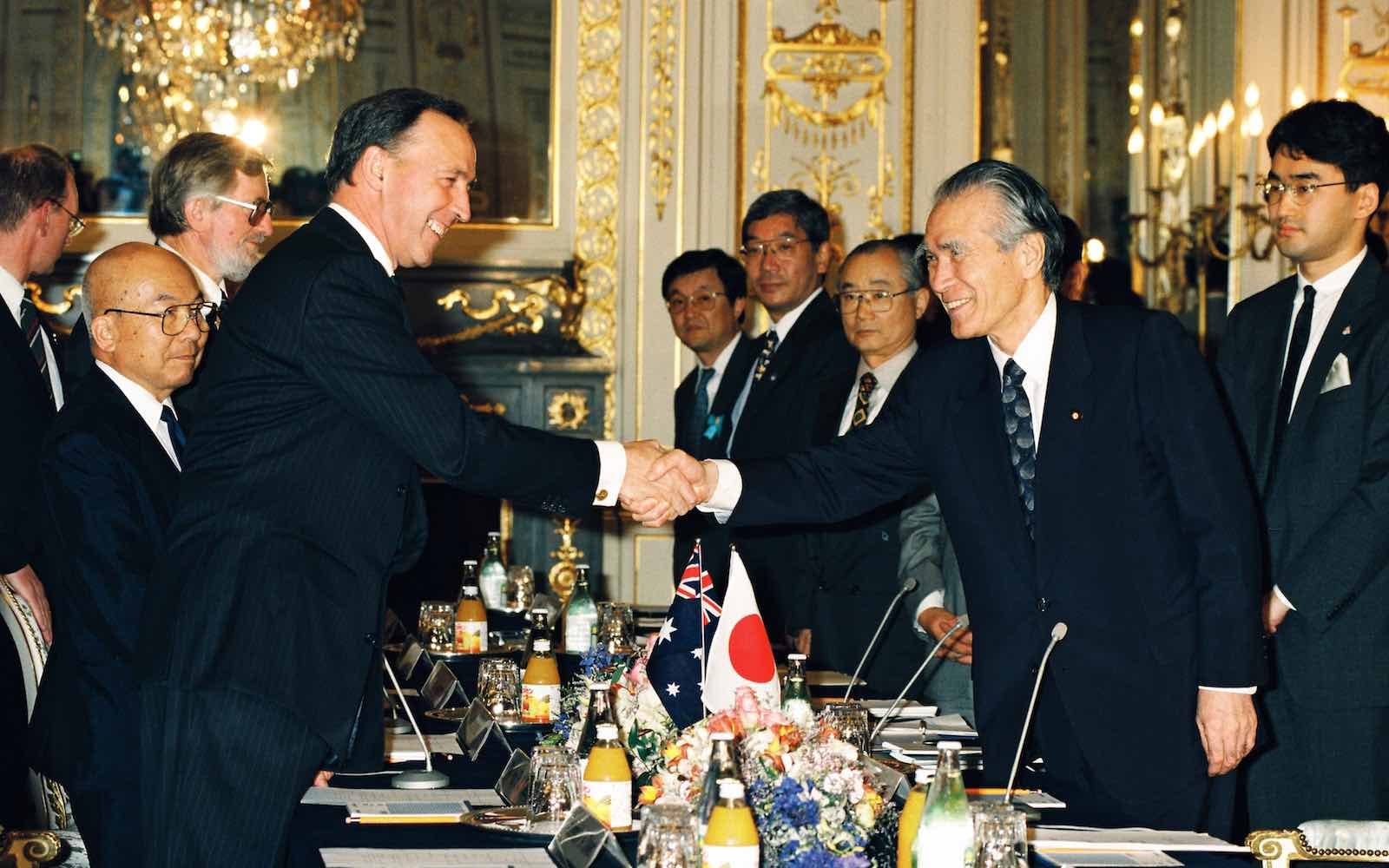
Wages in Australia are already among the lowest in the OECD, but select well paid economists continually stress that lower and middle income real wages must fall, while not suggesting that their own salaries or those of the bankers or executives many of them work for should be cut. In saying Australian real wages are too high they are not comparing us with OECD countries, but Asian countries. It is part of their grand vision of Asianisation that real wages should fall to those of Asian countries, so we can properly compete and “integrate” with Asia.
The call for Australia to integrate itself with Asia is essentially a call to the majority to deliver itself into the hands of the economic imperialists. These economists, bankers and big businesses would benefit individually, but Australia would merely become a colonial satellite, a quarry and construction dump, with the bulk of the locals a cheap labour pool without unity or a sense of national purpose.
People who support Asianisation, high immigration and the “free” movement of labour, should be very clear that in doing so, whatever noble motives they think they have, they are riding shotgun for those who would reverse all the gains in working conditions that the labour movement has fought for and which Australians in general take for granted. They are also acting as agents for the social disintegration of our country.
The was one chapter titled ‘What of the ACTU?’ from The National Observer’s recently published book Australia Forever, written by Australia’s most courageous MP, Graeme Campbell.
Pick up your copy of the book today on Amazon…
…or receive a complimentary copy when you become an Annual Supporter of The National Observer!
A generally excellent article, to which I’d add two points I think are relevant.
Firstly, Artificial Intelligence is already disrupting the knowledge work sector to a staggering degree. We will, within 2 years I believe, start to see unemployment and underemployment rise to levels not seen for decades. And unlike previous periods of high unemployment, the hardest hit will be those in mid-tier jobs that require moderately complex administrative tasks which are repeatable. Think clerical/accountancy roles, APS level public service jobs etc. With this eventuality almost upon us, white collar unions are working directly against their members interests by supporting ongoing mass immigration. The ‘skills shortage’ argument has always been spurious, but Australia is on the brink of an unprecedented skills and labour surplus. More workers? That’s the very last thing we (the currently employed) need.
Secondly, while the article focuses on the ACTU, there is considerable variation in the patriotic sentiment expressed by different trade unions in Australia. The AWU (mentioned in the article) is currently running a ‘reserve our gas’ campaign designed to drive down domestic energy costs by regulating - ever so moderately - the gas giants who currently plunder our energy wealth currently.
Now, this is not the same as campaigning directly for an end to mass immigration. I get it. But my point is that *some* unions may be more susceptible to pressure from members to adopt nationalist, or at least patriotic, positions than others. If you’re in a union that doesn’t represent your interests, or those of the Australian worker more broadly - quit and join a better union.
This writer quit a fake & gay union 12 years ago and joined the AWU. It created a stir in the workplace.. good. Send a message to your union that it needs to represent you.